
⚡ Bioelectronic Medicine: Harnessing Neural and Molecular Signals for Precision Therapeutics
Introduction
Modern medicine has traditionally relied on pharmaceuticals and biologics to treat disease. While these approaches have transformed healthcare, many chronic conditions remain difficult to manage due to treatment variability, systemic side effects, and the complexity of human physiology. As our understanding of the body's communication networks deepens, a new therapeutic paradigm is emerging—Bioelectronic Medicine.
Bioelectronic medicine represents the convergence of biotechnology, neuroscience, biomedical engineering, artificial intelligence, and precision medicine. Rather than introducing chemical compounds into the body, bioelectronic therapies aim to diagnose, monitor, and treat disease by modulating the electrical signals that regulate physiological functions.
By decoding and influencing neural circuits that control immunity, metabolism, inflammation, and organ function, bioelectronic medicine offers the potential for highly targeted and adaptive therapies that may redefine the future of healthcare.
What Is Bioelectronic Medicine?
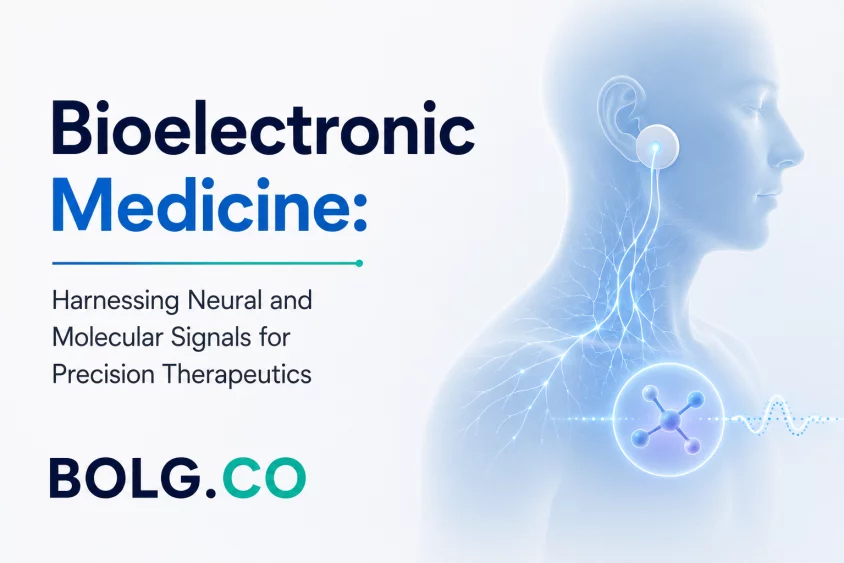
Bioelectronic medicine is an interdisciplinary field that uses electrical stimulation, neural interfaces, implantable devices, and advanced biosensors to monitor and regulate biological processes.
The fundamental concept is based on the fact that the nervous system continuously communicates with organs, tissues, and immune cells through electrical impulses. These neural signals act as information highways, controlling critical physiological functions such as:
Heart rate regulation
Immune responses
Inflammatory pathways
Gastrointestinal function
Metabolic homeostasis
Hormone secretion
Pain perception
When these signaling networks become disrupted, disease can occur. Bioelectronic medicine seeks to restore healthy communication patterns by precisely stimulating or inhibiting specific neural pathways.
The Biological Language of Electricity
Every thought, sensation, and physiological response within the human body depends on electrical activity.
Neurons communicate through action potentials—rapid electrical impulses that travel along nerve fibers and trigger the release of neurotransmitters. These signals form complex networks connecting the brain, spinal cord, peripheral nerves, and internal organs.
Recent advances in neuroscience have revealed that neural circuits play crucial roles in regulating:
Immune Function
The nervous system actively communicates with immune cells to coordinate inflammatory responses. Specific neural pathways can either amplify or suppress inflammation, creating opportunities for therapeutic intervention.
Organ Regulation
Organs such as the heart, liver, lungs, and gastrointestinal tract receive continuous neural input that controls their function. Altering these signals can influence disease progression and physiological performance.
Metabolic Control
Neural networks regulate appetite, glucose metabolism, insulin secretion, and energy expenditure, making them attractive targets for treating obesity and metabolic disorders.
Understanding these biological communication systems has laid the foundation for bioelectronic therapies.
Neuromodulation: The Core Technology Behind Bioelectronic Medicine
At the heart of bioelectronic medicine lies neuromodulation, the process of altering nervous system activity through targeted electrical stimulation.
Neuromodulation technologies can be categorized into several groups:
Implantable Devices
These devices are surgically implanted to deliver electrical stimulation directly to specific nerves or brain regions.
Examples include:
Deep Brain Stimulation (DBS)
Vagus Nerve Stimulation (VNS)
Spinal Cord Stimulation (SCS)
These technologies are already used clinically for conditions such as Parkinson's disease, epilepsy, chronic pain, and treatment-resistant depression.
Wearable Bioelectronic Systems
Advances in miniaturization have enabled the development of wearable devices capable of delivering non-invasive stimulation while continuously monitoring physiological signals.
These systems offer significant advantages:
Reduced surgical risks
Continuous health monitoring
Improved patient compliance
Real-time therapeutic adjustment
Closed-Loop Therapeutic Platforms
Unlike traditional therapies that deliver fixed treatments, closed-loop systems continuously collect biological data and automatically adjust stimulation parameters.
These adaptive systems represent a major step toward truly personalized medicine.
Vagus Nerve Stimulation: A Flagship Application
One of the most extensively studied areas of bioelectronic medicine is Vagus Nerve Stimulation (VNS).
The vagus nerve is often referred to as the body's "information superhighway" because it connects the brain to multiple organs, including:
Heart
Lungs
Liver
Gastrointestinal tract
Immune system
Research has demonstrated that stimulating the vagus nerve can activate the body's natural anti-inflammatory mechanisms, known as the inflammatory reflex.
This discovery has opened new possibilities for treating conditions such as:
Rheumatoid arthritis
Inflammatory bowel disease
Crohn's disease
Lupus
Chronic inflammatory disorders
Instead of suppressing the immune system with drugs, bioelectronic approaches may regulate inflammation by restoring normal neural signaling.
Bioelectronic Medicine and the Immune System
The emerging field of neuroimmunology has transformed our understanding of how the nervous and immune systems interact.
Scientists now recognize that neural circuits actively influence:
Cytokine production
Immune cell activation
Inflammatory responses
Tissue repair mechanisms
Bioelectronic devices can target these neural pathways with unprecedented precision.
Potential applications include:
Autoimmune Diseases
Targeted neural stimulation may reduce harmful immune activity without the side effects associated with long-term immunosuppressive medications.
Chronic Inflammation
Precise modulation of inflammatory pathways could provide new treatment options for chronic inflammatory disorders.
Regenerative Medicine
Neural signals may influence tissue repair and regeneration, creating opportunities to enhance recovery following injury or surgery.
The Rise of AI-Powered Bioelectronic Therapies
Artificial intelligence is accelerating the evolution of bioelectronic medicine.
Modern bioelectronic systems generate vast quantities of physiological data, including:
Neural activity patterns
Heart rate variability
Biomarker fluctuations
Electrophysiological signals
AI algorithms can analyze these datasets to identify disease signatures, predict physiological changes, and optimize therapeutic interventions.
Smart Closed-Loop Systems
Future bioelectronic devices may function as autonomous therapeutic platforms capable of:
Detecting disease-related signals
Predicting adverse events
Delivering personalized stimulation
Continuously adapting treatment parameters
This integration of AI and biotechnology is moving healthcare toward intelligent, self-regulating therapeutic systems.
Emerging Applications Beyond Neurology
Although bioelectronic medicine initially focused on neurological disorders, its applications are rapidly expanding.
Cardiovascular Diseases
Electrical modulation of autonomic pathways may improve cardiac function and reduce the risk of heart failure progression.
Metabolic Disorders
Researchers are exploring bioelectronic approaches to regulate insulin secretion, appetite control, and glucose metabolism.
Respiratory Diseases
Targeted stimulation may help regulate airway inflammation and improve respiratory function.
Mental Health
Advanced neuromodulation technologies are being investigated for depression, anxiety disorders, addiction, and post-traumatic stress disorder.
Precision Oncology
Researchers are beginning to explore how neural signaling influences tumor growth and cancer progression, opening entirely new avenues for cancer treatment.
Challenges and Ethical Considerations
Despite its promise, bioelectronic medicine faces several challenges.
Technical Complexity
Developing reliable neural interfaces capable of long-term performance remains a significant engineering challenge.
Data Privacy
Bioelectronic devices generate highly sensitive physiological data, raising concerns regarding privacy and cybersecurity.
Accessibility
Advanced implantable systems can be expensive, potentially limiting widespread adoption.
Ethical Questions
As devices become increasingly capable of influencing biological and cognitive functions, ethical discussions surrounding autonomy, consent, and human enhancement will become increasingly important.
Addressing these issues will be essential for responsible development and implementation.
The Future of Bioelectronic Medicine
The future of healthcare is becoming increasingly interconnected, intelligent, and personalized.
Over the coming decade, advances in:
Neural interface technologies
Flexible bioelectronics
AI-driven diagnostics
Digital therapeutics
Precision medicine
Wearable biosensors
will likely transform bioelectronic medicine from a specialized research field into a mainstream therapeutic platform.
Future systems may continuously monitor physiological states, predict disease before symptoms appear, and automatically deliver targeted interventions with unparalleled precision.
In many cases, electrical signals may complement—or even replace—traditional pharmaceutical treatments.
Conclusion
Bioelectronic medicine is redefining how we understand and treat disease. By harnessing the body's own electrical communication networks, researchers are developing therapies that are more precise, adaptive, and personalized than ever before.
As neuroscience, biotechnology, artificial intelligence, and biomedical engineering continue to converge, bioelectronic medicine stands poised to become one of the most transformative healthcare innovations of the 21st century. From regulating inflammation and metabolic disorders to enabling intelligent closed-loop therapies, this rapidly evolving field offers a glimpse into a future where disease is managed through real-time biological communication rather than conventional drug intervention alone.
Explore the Future of Biotechnology with BOLG
The revolution in bioelectronic medicine demonstrates how the boundaries between biology, engineering, data science, and medicine are rapidly disappearing. Tomorrow's biotechnology professionals will need interdisciplinary expertise to understand and develop these next-generation therapeutic systems.
At BOLG, we empower learners, researchers, and biotechnology enthusiasts with cutting-edge knowledge across molecular biology, bioinformatics, synthetic biology, precision medicine, and emerging biomedical technologies. As innovations like bioelectronic medicine reshape the future of healthcare, BOLG serves as your gateway to mastering the scientific breakthroughs driving the next era of biotechnology.
Join BOLG today and transform your curiosity into expertise—because the future of medicine belongs to those who understand the language of life, technology, and innovation.