
Biomolecular Condensates & Phase Separation: Engineering Membraneless Organelles for Precision Biotechnology
Course Overview
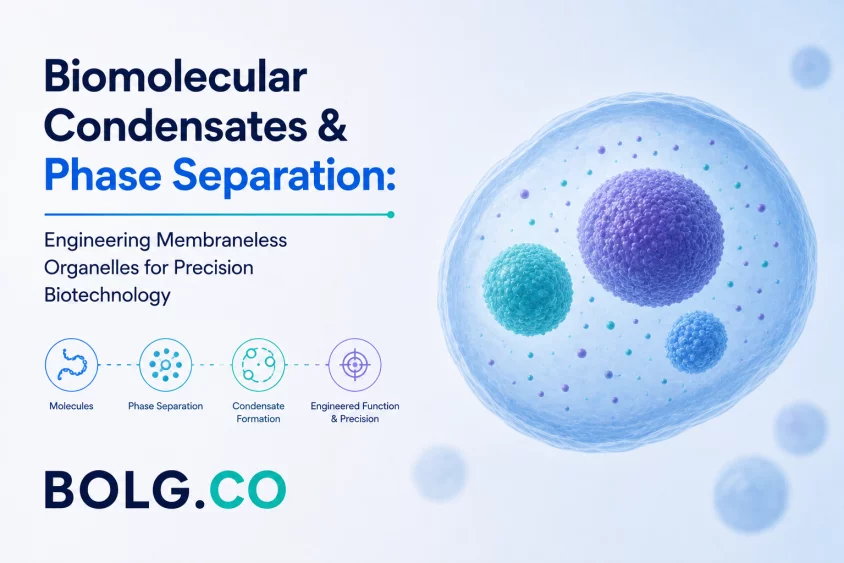
Cells are not simply collections of molecules operating independently. They are highly organized environments in which proteins, RNA, DNA, and other biomolecules are concentrated into specialized regions to control when and where biochemical reactions occur.
Some of these cellular compartments are surrounded by membranes, such as the nucleus, mitochondria, and lysosomes. Others are membrane-less compartments formed through the physical organization of biomolecules. These structures are broadly known as biomolecular condensates.
Biomolecular condensates have become a major area of research because they provide a new way to understand cellular organization, gene regulation, RNA biology, metabolism, disease, and therapeutic development. Their formation is frequently associated with phase separation, a physical process through which molecules concentrate into a distinct phase within a surrounding cellular environment.
This course provides a comprehensive introduction to biomolecular condensates, the molecular and physical principles underlying phase separation, naturally occurring condensates, their roles in health and disease, experimental approaches used to study them, and emerging strategies for engineering synthetic condensates.
The course also explores how scientists are beginning to treat intracellular organization itself as something that can be engineered—opening possibilities for programmable cellular compartments, precision therapeutics, synthetic biology, advanced drug discovery, and next-generation biotechnology.
Learning Objectives
By completing this course, learners will be able to:
Define biomolecular condensates and membrane-less organelles.
Explain the principles of phase separation and molecular condensation.
Understand the roles of proteins, RNA, intrinsically disordered regions, and multivalent interactions.
Distinguish biomolecular condensates from conventional membrane-bound organelles.
Describe major cellular condensates and their biological functions.
Explain how condensates regulate gene expression, RNA metabolism, signaling, and cellular stress responses.
Understand how abnormal condensate formation contributes to disease.
Describe major experimental methods used to investigate condensates.
Explain how synthetic condensates can be engineered.
Explore emerging therapeutic and biotechnology applications.
Understand the limitations, challenges, and future directions of condensate engineering.
Module 1: Understanding Biomolecular Condensates
What Is a Biomolecular Condensate?
A biomolecular condensate is a dynamic, concentrated assembly of biomolecules that forms within a cell without necessarily being surrounded by a lipid membrane.
Condensates can concentrate specific proteins, RNA molecules, nucleic acids, enzymes, and signaling factors in particular cellular locations.
Their fundamental purpose is to create a specialized biochemical environment.
By concentrating selected molecules, condensates can:
Increase reaction efficiency.
Separate competing biochemical processes.
Regulate molecular interactions.
Control access to cellular components.
Organize biochemical reactions in space and time.
In simple terms, a condensate can function like a temporary molecular workspace inside a cell.
Membrane-Bound Organelles vs. Membrane-Less Compartments
Traditional organelles are generally enclosed by membranes.
Examples include:
Nucleus — contains most of the cell's DNA.
Mitochondria — generate cellular energy and perform other metabolic functions.
Lysosomes — contain enzymes that break down cellular materials.
Endoplasmic reticulum — participates in protein and lipid production.
Biomolecular condensates differ because they are generally not enclosed by a conventional lipid membrane.
Instead, their boundaries emerge from the physical properties and interactions of their constituent molecules.
This provides cells with a highly flexible organizational strategy.
Module 2: The Science of Phase Separation
What Is Phase Separation?
Phase separation is a physical process in which molecules within a mixture separate into distinct phases with different compositions.
A familiar everyday example is oil and water separating into two phases.
Cells use analogous physical principles at the molecular scale.
Under appropriate conditions, certain proteins and nucleic acids can become highly concentrated in one region while becoming relatively depleted from the surrounding cellular environment.
This can generate a biomolecular condensate.
Liquid-Liquid Phase Separation
Liquid-liquid phase separation (LLPS) is one important mechanism associated with condensate formation.
During LLPS, biomolecules can separate into:
A dense phase containing high concentrations of selected molecules.
A surrounding dilute phase containing lower concentrations.
The resulting condensate can display properties resembling a liquid.
For example, molecules within some condensates can:
Move internally.
Exchange with the surrounding environment.
Fuse with neighboring condensates.
Change shape.
However, not all condensates behave like simple liquids.
Condensate Material States
Condensates can exhibit different physical properties.
Liquid-Like Condensates
These are dynamic and allow relatively rapid molecular exchange.
Gel-Like Condensates
These exhibit more restricted molecular movement.
Solid-Like Assemblies
Some assemblies become highly stable and may eventually form pathological aggregates.
Understanding these transitions is important because a normally dynamic condensate can sometimes become excessively stable or aberrantly aggregated.
Module 3: Molecular Principles Behind Condensation
Multivalent Interactions
A major concept in condensate biology is multivalency.
Multivalency refers to the ability of a molecule to participate in multiple interactions simultaneously.
A protein containing several interaction regions can connect with numerous molecules, creating a network of interactions.
When these interactions become sufficiently strong and numerous, biomolecules can collectively form a condensed phase.
Intrinsically Disordered Proteins and Regions
Many proteins associated with condensates contain intrinsically disordered regions (IDRs).
Unlike conventional protein domains that fold into stable three-dimensional structures, IDRs can remain flexible and dynamic.
IDRs can contain multiple interaction motifs, allowing proteins to interact with many partners.
They therefore frequently contribute to condensate formation and regulation.
RNA as a Condensate Organizer
RNA is not simply an information-carrying molecule.
RNA can also act as:
A molecular scaffold.
A binding platform.
A regulator of protein interactions.
A structural component of condensates.
RNA-protein interactions are therefore central to many cellular condensates involved in gene expression and RNA metabolism.
Molecular Valency and Concentration
Condensate formation depends on factors such as:
Molecular concentration.
Interaction strength.
Number of interaction sites.
Molecular composition.
Temperature.
Ionic conditions.
Post-translational modifications.
This means condensates are dynamic structures whose formation can change as cellular conditions change.
Module 4: Major Cellular Biomolecular Condensates
The Nucleolus
The nucleolus is a prominent membrane-less nuclear compartment.
Its major functions include:
Ribosomal RNA production.
Ribosome assembly.
Organization of proteins involved in ribosome biogenesis.
The nucleolus demonstrates how phase-separated organization can concentrate molecular machinery for a specific cellular task.
Stress Granules
Stress granules are transient cytoplasmic assemblies that form when cells experience certain types of stress.
They can contain:
RNA molecules.
RNA-binding proteins.
Translation-related factors.
Stress granules help cells temporarily reorganize RNA metabolism during challenging conditions.
Processing Bodies
Processing bodies, commonly called P-bodies, are cytoplasmic condensates involved in RNA regulation.
They contain proteins involved in processes such as:
mRNA degradation.
Translational repression.
RNA storage and processing.
Transcriptional Condensates
Some transcription-associated proteins can concentrate into dynamic nuclear assemblies near actively regulated genes.
These condensates may help organize:
Transcription factors.
RNA polymerase.
Regulatory proteins.
Enhancer-associated molecules.
This provides a spatial mechanism for regulating gene expression.
Module 5: Condensates and Cellular Function
Gene Regulation
Condensates can influence gene expression by concentrating transcriptional machinery and regulatory factors.
This spatial organization can affect:
Gene activation.
Gene repression.
RNA production.
Chromatin organization.
Thus, condensates provide another layer of regulation beyond the DNA sequence itself.
RNA Processing
RNA production does not end when transcription occurs.
RNA molecules must undergo processes such as:
Splicing.
Modification.
Transport.
Degradation.
Condensates can organize proteins and RNA involved in these processes.
Cellular Signaling
Signaling pathways often require multiple molecules to interact rapidly.
Condensate formation can increase the local concentration of signaling components and influence how efficiently signaling networks operate.
This suggests that cellular signaling is controlled not only by molecular identity but also by where molecules are concentrated within the cell.
Stress Responses
Cells constantly encounter environmental and physiological stresses.
Condensates provide flexible organizational mechanisms that allow cells to rapidly reorganize molecular components without permanently constructing new organelles.
Module 6: Biomolecular Condensates in Disease
Cancer
Abnormal condensate behavior can influence cancer biology.
Condensates may contribute to:
Dysregulated transcription.
Oncogenic signaling.
Abnormal gene expression.
Cellular adaptation to stress.
Some cancer-associated proteins may reorganize transcriptional machinery into condensates that promote inappropriate gene activation.
This has created interest in targeting condensate-associated processes therapeutically.
Neurodegenerative Diseases
Abnormal protein condensation has been associated with several neurodegenerative disorders.
Proteins that normally participate in dynamic condensates can sometimes undergo transitions toward more stable aggregates.
This can interfere with:
RNA metabolism.
Protein function.
Cellular transport.
Neuronal survival.
Understanding these transitions may provide new approaches to studying neurodegeneration.
Infectious Diseases
Viruses can interact with host-cell condensates and manipulate cellular organization.
Some viral components can:
Recruit host proteins.
Alter RNA processing.
Modify signaling.
Create specialized environments favorable to viral replication.
Condensate biology is therefore increasingly relevant to infectious disease research.
Module 7: How Biomolecular Condensates Are Studied
Microscopy
Microscopy is one of the primary approaches used to investigate condensates.
Researchers can examine:
Condensate size.
Shape.
Location.
Number.
Dynamics.
Fusion behavior.
Fluorescence microscopy is particularly useful for tracking specific proteins or RNA molecules.
Fluorescence Recovery After Photobleaching
FRAP is an imaging technique used to investigate molecular mobility.
A fluorescent region is temporarily bleached with light, and researchers measure how quickly fluorescence returns.
Rapid recovery generally indicates that molecules are dynamically exchanging with their surroundings.
Biochemical Approaches
Researchers can isolate or reconstitute molecular components to investigate condensate formation under controlled conditions.
These experiments help determine:
Which molecules are required.
Which interactions drive condensation.
How concentration affects formation.
How environmental conditions alter condensates.
Quantitative and Computational Analysis
Modern condensate research increasingly uses computational approaches to analyze:
Molecular interactions.
Phase behavior.
Protein sequence features.
Condensate composition.
Cellular imaging data.
Machine learning may eventually help predict which proteins and RNA molecules are capable of participating in condensate formation.
Module 8: Engineering Synthetic Biomolecular Condensates
What Is a Synthetic Condensate?
A synthetic biomolecular condensate is an engineered molecular compartment designed to organize selected biochemical components within a cell or artificial biological system.
Instead of simply observing natural condensates, scientists are beginning to ask:
Can we design intracellular compartments with specific functions?
This represents an important transition from understanding cellular organization to engineering cellular organization.
Engineering Molecular Scaffolds
Scientists can design proteins containing specific interaction domains that promote controlled molecular assembly.
These engineered scaffolds can help recruit selected:
Enzymes.
Signaling proteins.
RNA molecules.
Transcriptional regulators.
The objective is to control which molecules enter the condensate and what biochemical reactions occur there.
Programmable Condensates
Future synthetic condensates may be designed to respond to specific signals.
For example, a condensate could theoretically:
Detect a molecular signal.
Assemble under that condition.
Recruit a therapeutic enzyme.
Produce a desired molecule.
Dissolve when the signal disappears.
This creates the possibility of dynamic intracellular biotechnology platforms.
Module 9: Biotechnology and Therapeutic Applications
Precision Drug Discovery
Traditional drug discovery often focuses on individual proteins or enzymes.
Condensate biology introduces another therapeutic concept: targeting the organization and assembly of molecular systems.
Potential strategies include altering:
Condensate formation.
Molecular recruitment.
Phase transitions.
Protein-protein interactions.
This could produce entirely new classes of therapeutic targets.
Synthetic Biochemistry
Artificial condensates can potentially concentrate enzymes within defined molecular environments.
This could improve biochemical efficiency by bringing reaction components into close proximity.
Potential applications include:
Metabolic engineering.
Biosynthesis.
Biocatalysis.
Molecular manufacturing.
Cellular Biosensors
Condensates could potentially be engineered to assemble in response to disease-associated signals.
This could create intracellular systems capable of detecting:
Metabolic changes.
Stress signals.
Abnormal proteins.
Disease-associated molecules.
Therapeutic Intracellular Compartments
An engineered condensate could potentially function as a localized biochemical factory.
Such a compartment might:
Concentrate a therapeutic enzyme.
Sequester harmful molecules.
Regulate signaling.
Produce therapeutic proteins.
This approach could provide highly localized control over cellular processes.
Module 10: Challenges, Safety, and Future Directions
Major Challenges
Despite rapid progress, condensate engineering remains an emerging field.
Important challenges include:
Predicting condensate behavior.
Controlling condensate composition.
Preventing unwanted aggregation.
Understanding long-term cellular effects.
Achieving precise spatial and temporal control.
Biological systems are highly interconnected, so modifying one condensate may influence multiple cellular pathways.
Distinguishing Functional Condensation from Aggregation
An important challenge is distinguishing physiological condensates from pathological aggregates.
A functional condensate is generally:
Dynamic.
Reversible.
Regulated.
Biologically useful.
Pathological aggregation may instead be:
Excessively stable.
Difficult to dissolve.
Disruptive to cellular function.
Understanding this distinction is essential for therapeutic development.
The Future of Condensate Engineering
Future research may lead to:
Programmable intracellular compartments.
Designer organelles.
Condensate-based therapeutics.
Synthetic metabolic factories.
Smart molecular sensors.
Condensate-targeting drugs.
AI-assisted condensate design.
The long-term vision is to make intracellular organization itself programmable.
Course Summary
Biomolecular condensates represent a fundamental principle of cellular organization in which biomolecules dynamically assemble into concentrated compartments without requiring conventional membranes.
Through phase separation and multivalent molecular interactions, cells can spatially organize complex biochemical processes, regulate gene expression, control RNA metabolism, coordinate signaling, and respond rapidly to stress.
Modern research has revealed that abnormalities in condensate formation and material properties may contribute to cancer, neurodegeneration, infection, and other diseases. At the same time, scientists are beginning to engineer synthetic condensates that can organize molecular components for biotechnology and therapeutic purposes.
The emerging field of condensate engineering therefore represents a transition from simply studying the architecture of cells to programming their internal organization.
Key Takeaways
Biomolecular condensates are dynamic molecular compartments that generally lack conventional lipid membranes.
Phase separation is an important physical mechanism underlying the formation of many condensates.
Proteins, RNA, intrinsically disordered regions, and multivalent interactions are central to condensate formation.
Natural condensates participate in gene regulation, RNA processing, stress responses, and signaling.
Abnormal condensation can contribute to disease.
Modern imaging, biochemical reconstitution, and computational methods allow researchers to investigate condensate behavior.
Synthetic condensates can potentially be engineered to organize biochemical reactions.
Condensate engineering may create new approaches for drug discovery, synthetic biology, metabolic engineering, and precision medicine.
The future goal is increasingly to make cellular organization programmable.
Glossary
Biomolecular Condensate: A concentrated assembly of biomolecules that forms within a cellular environment without necessarily being surrounded by a conventional membrane.
Condensation: The process through which biomolecules become concentrated into a distinct molecular phase.
Intrinsically Disordered Region (IDR): A flexible protein region that lacks a single stable three-dimensional structure and can participate in multiple molecular interactions.
Liquid-Liquid Phase Separation (LLPS): A physical process in which components of a mixture separate into distinct phases, producing a dense molecular phase and a surrounding dilute phase.
Membrane-Less Organelle: A cellular compartment that performs specialized functions without being enclosed by a conventional lipid membrane.
Multivalency: The ability of a molecule to participate in multiple molecular interactions simultaneously.
Nucleolus: A major nuclear condensate responsible primarily for ribosomal RNA production and ribosome assembly.
P-Body: A cytoplasmic condensate involved in RNA regulation, including mRNA degradation and translational control.
Phase Separation: Physical separation of molecules into distinct phases with different compositions or properties.
Scaffold: A molecular component that provides interaction sites capable of recruiting and organizing other molecules.
Stress Granule: A temporary cytoplasmic condensate that forms during cellular stress and contains RNA and associated proteins.
Synthetic Condensate: An engineered molecular compartment designed to organize selected biomolecules for a defined biological function.
Final Perspective
The discovery that cells can organize biochemical reactions through dynamic, membrane-less compartments has opened an entirely new dimension of biological engineering. Scientists are increasingly moving beyond the traditional question of “Which molecule controls this process?” toward a broader question: “How does the spatial organization of molecules control the process?”
This shift has profound implications for biotechnology. If researchers can understand and control phase behavior, molecular interactions, and intracellular organization, they may eventually be able to construct programmable biochemical environments inside living cells.
From next-generation therapeutics and drug discovery to synthetic metabolism and artificial cellular compartments, biomolecular condensates could become one of the most powerful platforms for engineering the microscopic architecture of life.