
Cell-Free Biotechnology: Engineering Biology Without Living Cells
Course Overview
Biotechnology has traditionally relied on living cells as miniature factories for producing proteins, chemicals, medicines, and biological materials. But a powerful shift is underway: scientists are increasingly learning how to separate the molecular machinery of life from the cell itself and use that machinery as an engineering platform.
This is the foundation of cell-free biotechnology.
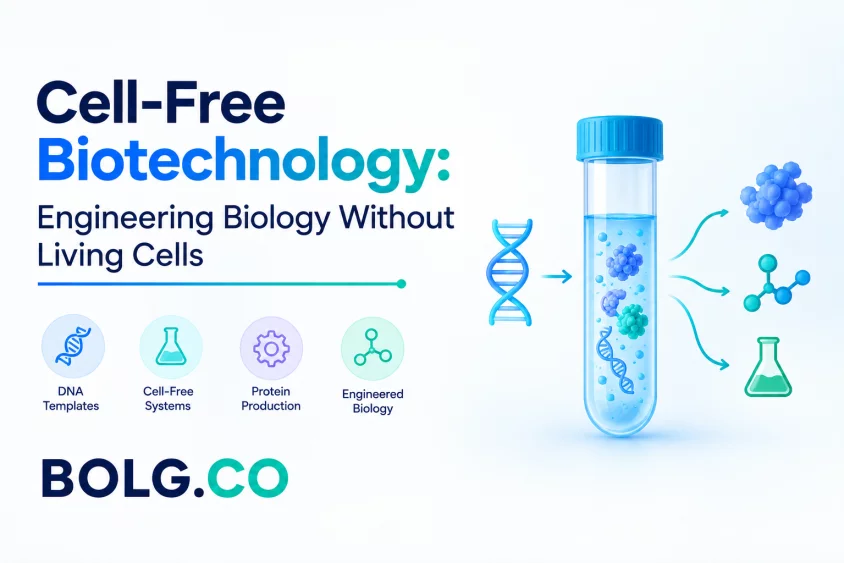
Cell-free biotechnology involves carrying out biological processes outside intact living cells. Instead of placing engineered DNA into a microorganism and asking the organism to manufacture a desired product, researchers can use cellular components—such as ribosomes, enzymes, transcription factors, metabolic enzymes, and energy-generating systems—in an external biochemical environment.
The result is a highly programmable biological platform that can be used for protein production, synthetic biology, diagnostics, biosensing, metabolic engineering, drug discovery, biomanufacturing, and biological prototyping.
Cell-free systems are particularly exciting because they remove many of the constraints imposed by living organisms. A cell must survive, grow, reproduce, regulate its internal environment, and protect itself from potentially harmful engineered molecules. A cell-free system does not have these same biological priorities.
This course explores how cell-free biotechnology works, why it matters, how it is being applied, and where it could lead the future of biotechnology.
Learning Objectives
By completing this course, learners will be able to:
Define cell-free biotechnology and explain how it differs from conventional cell-based biotechnology.
Understand the molecular components required for biological activity outside living cells.
Explain the principles of cell-free gene expression and cell-free protein synthesis.
Understand how DNA can be converted into RNA and proteins in cell-free environments.
Explain how cell-free systems support synthetic biology and genetic-circuit prototyping.
Explore applications in diagnostics, biosensing, protein production, and biomanufacturing.
Understand how cell-free metabolic pathways can function outside intact organisms.
Examine the role of cell-free systems in drug discovery and protein engineering.
Understand advanced concepts such as continuous cell-free systems, microfluidic platforms, artificial cells, and compartmentalized systems.
Evaluate the major advantages, limitations, technical challenges, and future opportunities of cell-free biotechnology.
Appreciate the potential of cell-free platforms to transform how biological systems are designed, tested, manufactured, and deployed.
Module 1 — Foundations of Cell-Free Biotechnology
1.1 What Is Cell-Free Biotechnology?
Cell-free biotechnology refers to the use of biological molecules and biochemical machinery outside intact living cells to perform useful biological functions.
A living cell normally contains thousands of interacting components:
DNA
RNA
Ribosomes
Proteins
Enzymes
Metabolic pathways
Membranes
Energy-generating systems
Regulatory networks
Cell-free biotechnology takes selected parts of this machinery and places them into an external environment where they can perform biological tasks.
For example, a cell-free system may contain the molecular machinery necessary to read a DNA template and produce a protein without requiring a living microorganism to grow.
The central idea is therefore:
Use the machinery of biology without necessarily using the whole biological organism.
1.2 Cell-Based Versus Cell-Free Biotechnology
Traditional biotechnology frequently depends on living organisms.
For example, engineered bacteria may be used to produce a recombinant protein. The microorganism must grow and maintain its cellular processes while producing the desired molecule.
Cell-free biotechnology separates the production task from cellular survival.
Feature Cell-Based Biotechnology Cell-Free Biotechnology
Living organism required Yes No intact cell required
Cellular growth Usually required Not required
Biological machinery Inside cells Outside cells
Control over reaction Limited by cellular regulation Greater direct control
Genetic prototyping Often slower Potentially rapid
Production environment Complex cellular system Defined biochemical environment
Scalability Established Developing rapidly
Product toxicity to cells Can be problematic Often less restrictive
The distinction is not that cell-free biotechnology eliminates biology. Rather, it extracts biology from its cellular context.
1.3 Why Remove the Cell?
Living cells are extraordinarily powerful but also extraordinarily complicated.
When scientists introduce an engineered genetic pathway into a cell, the pathway competes with the organism's natural processes for:
Energy
Nutrients
Ribosomes
Enzymes
Cellular space
Regulatory resources
The engineered pathway may also interfere with normal cellular functions.
Cell-free systems can simplify this environment.
Scientists can focus directly on the biochemical process of interest rather than simultaneously managing the survival and reproduction of a living organism.
This creates a major engineering advantage:
The cell becomes optional rather than mandatory.
1.4 Major Types of Cell-Free Systems
Cell-free systems can broadly be divided into two categories.
Extract-Based Systems
Cellular material is processed to produce an extract containing many of the molecular components required for biological activity.
Such systems may contain:
Ribosomes
RNA polymerases
Aminoacyl-tRNA synthetases
Metabolic enzymes
Translation factors
Regulatory proteins
Energy-generation machinery
The extract therefore functions as a biochemical representation of part of the cell.
Purified-Component Systems
Instead of using a complex cellular extract, researchers can assemble systems from selected purified molecular components.
This approach provides greater control over composition and can make individual variables easier to study.
However, constructing a highly functional purified system can be considerably more complex because many biological components must work together.
1.5 Advantages of Cell-Free Biotechnology
Important advantages include:
Speed: Biological systems can often be tested without waiting for cell growth.
Control: Researchers can directly manipulate the biochemical environment.
Accessibility: Biological reactions can potentially be performed in compact or portable formats.
Design flexibility: Genetic constructs can be tested without permanently modifying an organism.
Reduced cellular constraints: Toxic proteins or burdensome pathways may be easier to study outside living cells.
Rapid prototyping: Many biological designs can be evaluated in parallel.
Module 2 — Cell-Free Gene Expression
2.1 From DNA to Protein Outside the Cell
One of the most important capabilities of cell-free biotechnology is gene expression outside living cells.
In biological systems, genetic information generally follows the sequence:
DNA → RNA → Protein
The first stage is transcription, where DNA information is copied into RNA.
The second stage is translation, where ribosomes use messenger RNA as a template for protein synthesis.
Cell-free systems can reproduce these processes outside intact cells.
2.2 Transcription in Cell-Free Systems
Transcription requires molecular machinery capable of recognizing a DNA template and producing RNA.
The major components include:
DNA templates
RNA polymerase
Nucleotides
Regulatory factors
Appropriate biochemical conditions
The resulting RNA can then serve as the information source for protein production.
This allows scientists to study gene regulation without requiring an entire organism.
2.3 Translation in Cell-Free Systems
Translation is carried out primarily by ribosomes.
Ribosomes interpret messenger RNA and connect amino acids together in the sequence encoded by the genetic information.
Cell-free translation systems therefore require an integrated molecular environment containing components such as:
Ribosomes
Transfer RNAs
Amino acids
Translation factors
Energy-supporting components
When transcription and translation are coupled, DNA can ultimately direct protein production within the same external biochemical system.
2.4 Cell-Free Protein Synthesis
Cell-free protein synthesis (CFPS) is one of the most established applications of cell-free biotechnology.
It allows researchers to produce proteins without growing a conventional production organism.
Potential products include:
Research proteins
Industrial enzymes
Antigens
Therapeutic proteins
Protein variants
Molecular sensors
Diagnostic reagents
An important advantage is speed.
Instead of creating a stable engineered cell line and optimizing cellular growth, scientists can potentially move more directly from a genetic design to protein production and evaluation.
2.5 Prokaryotic and Eukaryotic Cell-Free Platforms
Different biological sources provide different capabilities.
Prokaryotic Systems
These are often valued for:
Relative simplicity
High productivity
Established technology
Cost-effectiveness
Eukaryotic Systems
Eukaryotic cell-free systems can provide capabilities more closely associated with complex cellular biology.
They may be advantageous when studying proteins requiring sophisticated processing or specific biochemical environments.
The choice of platform therefore depends strongly on the desired biological product and function.
Module 3 — Cell-Free Synthetic Biology
3.1 Cell-Free Systems as Biological Prototyping Platforms
Synthetic biology involves designing biological systems according to engineering principles.
Cell-free platforms can dramatically accelerate the design-build-test cycle.
Instead of first constructing a living organism, researchers can evaluate biological designs in an external system.
This makes cell-free biotechnology an important bridge between:
Computational design → Molecular construction → Experimental testing
3.2 Genetic Circuits
Synthetic genetic circuits can contain combinations of:
Promoters
Regulatory sequences
Transcription factors
RNA elements
Ribosome-binding elements
Reporter genes
Regulatory proteins
Together, these components can create programmable biological behaviors.
Cell-free systems provide a simplified environment for investigating how these components interact.
3.3 Biological Logic
Biological systems can be designed to behave somewhat like computational logic.
For example, a molecular system could be designed conceptually to produce a signal only when:
Signal A AND Signal B
are both present.
Other systems may behave according to:
Signal A OR Signal B
or respond when a particular molecular condition is absent.
Cell-free environments make these types of biological circuits easier to study because the molecular components are directly accessible.
3.4 Cell-Free Prototyping
The value of cell-free prototyping is not simply speed.
It also provides an opportunity to isolate variables.
Researchers can ask:
Does a genetic circuit function?
Is a regulatory interaction sufficiently strong?
Does a protein interfere with another component?
Does a pathway produce the desired output?
How does changing a design alter system behavior?
This can reduce the number of iterations required before moving a successful design into a more complex biological environment.
Module 4 — Cell-Free Diagnostics
One of the most transformative applications of cell-free biotechnology is diagnostic sensing.
4.1 Molecular Detection
Cell-free systems can be designed to recognize biological or chemical signals and convert recognition into a measurable output.
Possible targets include:
Nucleic acids
Pathogen-associated molecules
Biomarkers
Environmental contaminants
Antibiotic-resistance signals
Foodborne pathogens
Metabolic indicators
The output may be designed to produce a visible, fluorescent, or otherwise measurable signal.
4.2 Paper-Based Cell-Free Diagnostics
An especially innovative direction is the integration of cell-free systems with paper-based materials.
Biological sensing components can be incorporated into compact formats that are easier to transport and potentially suitable for decentralized testing.
This creates the possibility of moving some forms of molecular diagnostics away from centralized laboratories and toward:
Portable → Distributed → Rapid biological detection
4.3 Freeze-Dried Cell-Free Systems
Some cell-free components can be stabilized through approaches such as freeze-drying and later reconstituted when needed.
This is particularly interesting for applications where biological reagents need to be:
Transportable
Stored for extended periods
Distributed without complex laboratory infrastructure
Activated when required
Such technologies could contribute to rapid-response diagnostics and biological monitoring.
Module 5 — Cell-Free Protein and Enzyme Production
5.1 Why Produce Proteins Cell-Free?
Protein production is central to biotechnology.
Traditional systems can face problems such as:
Poor protein folding
Cellular toxicity
Low production
Degradation
Difficult purification
Metabolic burden
Cell-free systems offer an alternative production environment.
Because there is no requirement for a living cell to remain healthy and reproduce, certain proteins that are difficult to express in cells may become more accessible.
5.2 Protein Engineering
Cell-free protein synthesis can be integrated with protein engineering.
Scientists can create libraries of protein variants and evaluate their properties.
This is particularly valuable for:
Enzyme optimization
Binding proteins
Biosensors
Therapeutic candidates
Industrial proteins
The broader concept is:
Design → Express → Evaluate → Improve
Cell-free technology can help shorten this cycle.
Module 6 — Cell-Free Biomanufacturing
6.1 Beyond Protein Production
Cell-free biotechnology is not limited to making proteins.
Biochemical pathways can also be reconstructed outside cells to produce useful molecules.
A metabolic pathway may consist of multiple enzymes that transform:
Starting material → Intermediate 1 → Intermediate 2 → Final product
Instead of placing the entire pathway inside a living organism, scientists can potentially reconstruct the required enzymatic network externally.
6.2 Cell-Free Metabolic Engineering
Cell-free metabolic engineering involves designing biochemical systems where enzymes cooperate to manufacture a desired compound.
Potential products include:
Pharmaceutical intermediates
Specialty chemicals
Bio-based materials
Nutritional compounds
Industrial metabolites
Because the system does not need to support cellular survival, resources can potentially be directed more specifically toward the desired biochemical conversion.
6.3 Cell-Free Versus Fermentation
Microbial fermentation remains one of biotechnology's most important manufacturing technologies.
However, fermentation requires organisms to:
Grow
Maintain cellular structures
Reproduce
Balance metabolism
Tolerate the product
Cell-free production removes many of these requirements.
The challenge is that cell-free systems must independently maintain biochemical activity and often require carefully managed molecular resources.
Therefore, cell-free manufacturing should not necessarily be viewed as a universal replacement for fermentation.
Instead, the two approaches can be considered complementary manufacturing platforms.
Module 7 — Cell-Free Biotechnology in Drug Discovery
Cell-free platforms are increasingly relevant to pharmaceutical research.
7.1 Rapid Protein Production
Drug discovery frequently requires proteins for:
Target validation
Biochemical studies
Screening
Structural analysis
Assay development
Cell-free protein production can potentially accelerate access to these molecules.
7.2 Enzyme and Molecular Screening
Cell-free systems can be used as controlled environments for examining biochemical interactions.
Researchers may investigate:
Enzyme activity
Protein interactions
Molecular recognition
Pathway behavior
Candidate therapeutic mechanisms
The ability to create many biological variants can support high-throughput research.
7.3 Personalized and Rapid Biomanufacturing
An emerging concept is the possibility of producing biological materials closer to where they are needed.
In the long term, cell-free platforms could contribute to:
Distributed pharmaceutical manufacturing
Rapid-response biologics production
Personalized therapeutic development
Small-batch biological manufacturing
This could complement centralized industrial biotechnology.
Module 8 — Cell-Free Biosensing and Environmental Biotechnology
Cell-free biotechnology also creates opportunities beyond medicine.
8.1 Environmental Monitoring
Cell-free sensors could potentially detect:
Pollutants
Heavy-metal-associated signals
Chemical contaminants
Pathogen indicators
Changes in environmental conditions
Portable biosensing systems could support more distributed environmental monitoring.
8.2 Food Safety
Food production and distribution require rapid detection of biological hazards.
Cell-free sensing platforms may help identify:
Foodborne pathogens
Contaminants
Spoilage-associated signals
Specific molecular markers
The long-term vision is to create inexpensive, rapid, and accessible molecular detection systems.
8.3 Agricultural Biotechnology
Potential agricultural applications include monitoring:
Plant pathogens
Soil-associated signals
Agricultural contaminants
Crop-associated biomarkers
Cell-free sensors could eventually become part of decentralized agricultural monitoring networks.
Module 9 — Advanced Cell-Free Systems
Cell-free biotechnology is rapidly expanding beyond conventional batch reactions.
9.1 Continuous Cell-Free Systems
Traditional cell-free reactions eventually consume resources and accumulate inhibitory byproducts.
Continuous systems attempt to maintain biological activity for longer periods by exchanging resources and removing waste.
This creates a conceptual transition from:
One-time biochemical reaction
to
Persistent molecular production system
9.2 Microfluidic Cell-Free Biotechnology
Microfluidics involves manipulating extremely small volumes of fluids.
When combined with cell-free systems, microfluidic technologies can enable:
Miniaturized reactions
High-throughput screening
Parallel experimentation
Reduced reagent consumption
Automated analysis
This creates a powerful platform for biological experimentation at small scales.
9.3 Artificial Cells
One of the most ambitious directions is the development of artificial cells.
Artificial cells seek to reproduce selected characteristics of living cells using engineered molecular components.
These systems may incorporate:
Membrane-like compartments
Genetic information
Protein synthesis machinery
Energy systems
Molecular sensors
Internal biochemical networks
The objective is not necessarily to recreate every feature of life.
Instead, scientists can ask:
What is the minimum molecular architecture required to reproduce a particular biological function?
This question connects cell-free biotechnology with fundamental research into the origin, organization, and engineering of life.
9.4 Compartmentalized Cell-Free Systems
Biology frequently depends on separating biochemical processes into different compartments.
Artificial compartments can help organize cell-free reactions spatially.
This can improve the ability to study:
Molecular communication
Metabolic channeling
Reaction organization
Synthetic cellular behavior
Such systems move cell-free biotechnology toward increasingly sophisticated forms of engineered biological organization.
Module 10 — Automation, AI, and the Future of Cell-Free Biotechnology
The future of cell-free biotechnology will increasingly involve automation and computational design.
10.1 Automated Biological Prototyping
Automation can allow researchers to test many biological designs systematically.
A future workflow may involve:
Computational design → Automated construction → Cell-free testing → Data analysis → Improved design
This creates an increasingly rapid biological engineering cycle.
10.2 AI-Assisted Cell-Free Engineering
Artificial intelligence can potentially assist with:
Predicting biological component behavior
Designing genetic constructs
Optimizing pathway architecture
Identifying promising protein variants
Analyzing experimental datasets
Predicting system performance
The combination of AI and cell-free biotechnology could transform biological engineering into a much more iterative and data-driven discipline.
10.3 Distributed Biomanufacturing
One of the most exciting possibilities is manufacturing biology closer to the point of need.
Instead of relying exclusively on large centralized production facilities, future systems could potentially use compact biological manufacturing platforms.
This could be valuable for:
Remote environments
Emergency response
Specialized medical applications
Research facilities
Resource-limited settings
Space exploration
Module 11 — Major Challenges and Limitations
Despite its enormous potential, cell-free biotechnology is not without challenges.
11.1 Resource Limitations
Cell-free systems consume molecular resources.
Important components can become depleted, while unwanted byproducts can accumulate.
Maintaining biochemical activity therefore remains a major engineering challenge.
11.2 Cost
Highly purified molecular components can be expensive.
Although costs have decreased with technological progress, economic competitiveness remains an important consideration for large-scale applications.
11.3 Stability
Biological molecules are sensitive to their environment.
Maintaining functional enzymes, ribosomes, nucleic acids, and other components over time can be difficult.
11.4 Scale-Up
A system that performs well at a small experimental scale does not automatically translate into efficient industrial production.
Scale introduces challenges involving:
Mass transfer
Resource distribution
Reaction stability
Heat management
Product recovery
Economic efficiency
11.5 Complexity
Removing the cell does not remove biological complexity completely.
Cellular systems contain highly evolved networks that coordinate thousands of molecular processes.
Reconstructing useful functions outside the cell therefore requires careful systems-level engineering.
Module 12 — Biosafety, Biosecurity, and Responsible Development
As cell-free biotechnology becomes more capable, responsible development becomes increasingly important.
A major advantage of many cell-free platforms is that they do not inherently require the creation or propagation of modified living organisms.
However, powerful biological technologies still require careful consideration of:
Biosafety
Biosecurity
Environmental impact
Responsible research practices
Data governance
Dual-use concerns
Equitable access
The future of biotechnology depends not only on what scientists can engineer, but also on how responsibly those capabilities are developed and deployed.
Module 13 — The Broader Significance of Cell-Free Biotechnology
Cell-free biotechnology represents more than a new laboratory platform.
It reflects a deeper transformation in the philosophy of biotechnology.
Traditional biotechnology often asks:
Which organism can we engineer to perform this task?
Cell-free biotechnology increasingly asks:
Which molecular functions do we need, and can we assemble them into a programmable system outside the organism?
That shift has major implications.
Biotechnology can increasingly become:
Modular
Programmable
Portable
Rapid
Automatable
Distributed
Instead of treating the living cell as an indivisible biological machine, scientists can increasingly treat its molecular machinery as a collection of engineering components.
Key Applications at a Glance
Area Potential Role of Cell-Free Biotechnology
Synthetic Biology Rapid testing of genetic circuits
Protein Production Fast production of selected proteins
Diagnostics Molecular detection and biosensing
Drug Discovery Protein production and biochemical screening
Biomanufacturing Enzyme-based production of useful molecules
Environmental Biotechnology Portable molecular monitoring
Food Safety Detection of biological contaminants
Agriculture Pathogen and environmental sensing
Artificial Cells Reconstruction of cellular functions
Research Studying biological mechanisms
Automation High-throughput biological prototyping
Space Biotechnology Potential on-demand biological production
Course Summary
Cell-free biotechnology represents a major evolution in biological engineering.
Rather than depending entirely on intact living organisms, researchers can isolate and reorganize the molecular machinery of life into programmable external systems.
At its foundation, cell-free biotechnology enables processes such as:
DNA → RNA → Protein
to occur outside conventional cellular environments.
From there, the technology expands into synthetic genetic circuits, molecular diagnostics, protein engineering, metabolic manufacturing, environmental sensing, drug discovery, artificial cells, and distributed biotechnology.
Its greatest advantage is not simply that it eliminates the cell.
Its deeper significance is that it allows scientists to separate biological function from biological survival.
That separation creates a new engineering space in which molecular systems can be designed, tested, modified, and optimized with unprecedented flexibility.
The field still faces important challenges involving cost, stability, scalability, resource management, and responsible deployment. Nevertheless, continued progress in molecular engineering, automation, microfluidics, synthetic biology, and artificial intelligence is steadily expanding what cell-free systems can accomplish.
The emerging vision is powerful:
Biotechnology does not always need a living cell to create something biological.
Glossary of Key Terms
Cell-Free Biotechnology
The use of biological components outside intact living cells to perform useful biological functions.
Cell-Free System
An external biochemical environment containing molecular machinery capable of performing selected biological processes.
Cell-Free Protein Synthesis (CFPS)
Production of proteins using cellular translation machinery outside an intact living cell.
Transcription
The process by which genetic information encoded in DNA is copied into RNA.
Translation
The process through which ribosomes use RNA information to assemble proteins.
Ribosome
A molecular machine responsible for protein synthesis.
Genetic Circuit
A designed network of biological components that produces a programmable molecular response.
Biosensor
A system that detects a biological or chemical signal and converts it into a measurable output.
Cell Extract
A biochemical preparation containing molecular components obtained from cells.
Metabolic Pathway
A sequence of biochemical reactions that converts molecules from one form into another.
Cell-Free Metabolic Engineering
The design of biochemical pathways outside intact cells to produce desired molecules.
Microfluidics
Technology for manipulating very small volumes of fluids, often enabling highly miniaturized biological systems.
Artificial Cell
An engineered compartment designed to reproduce selected characteristics or functions of living cells.
Biomanufacturing
The use of biological systems or biological processes to manufacture useful products.
Synthetic Biology
The engineering of biological systems using principles of design, modularity, and programmability.
Distributed Biotechnology
The development of biological technologies that can operate closer to the location where biological products or measurements are required.
Final Takeaway
Cell-free biotechnology is helping redefine the boundaries of what it means to engineer biology.
The cell is no longer the only possible place where biological machinery can operate. By extracting, simplifying, recombining, and programming molecular components, scientists are creating biological systems that are increasingly portable, controllable, modular, and programmable.
The convergence of cell-free systems with synthetic biology, microfluidics, automation, protein engineering, and AI could ultimately produce a new generation of biological technologies capable of responding rapidly to medical, industrial, environmental, and societal challenges.
The most important lesson is therefore simple:
The future of biotechnology may not be about engineering cells alone—it may be about engineering the molecular machinery that makes cells work.
Continue Your Biotechnology Journey with BOLG
Step beyond the boundaries of conventional biotechnology with BOLG.
Explore the molecular machinery of life, discover emerging biological technologies, and transform complex scientific concepts into knowledge you can apply to the future of biotechnology.
BOLG is where curiosity meets cutting-edge biotechnology—learn, explore, and unlock the technologies shaping the next generation of biological innovation.
Dive deeper into the future of biotechnology with BOLG and discover how the machinery of life can become the machinery of tomorrow.