
🧬 Glycoengineering: Reprogramming Cellular Glycans for Next-Generation Therapeutics
Introduction: The Hidden Language of Biology
When scientists think about biological information, DNA and proteins naturally take center stage. Yet between cells, proteins, tissues, and the immune system lies another extraordinarily sophisticated layer of biological information: glycans.
Glycans are complex chains of sugars attached to proteins, lipids, and cell surfaces. Far from being passive decorations, they influence how molecules fold, how cells communicate, how immune cells recognize targets, and how biological systems respond to disease.
This realization has given rise to an increasingly important biotechnology field: glycoengineering.
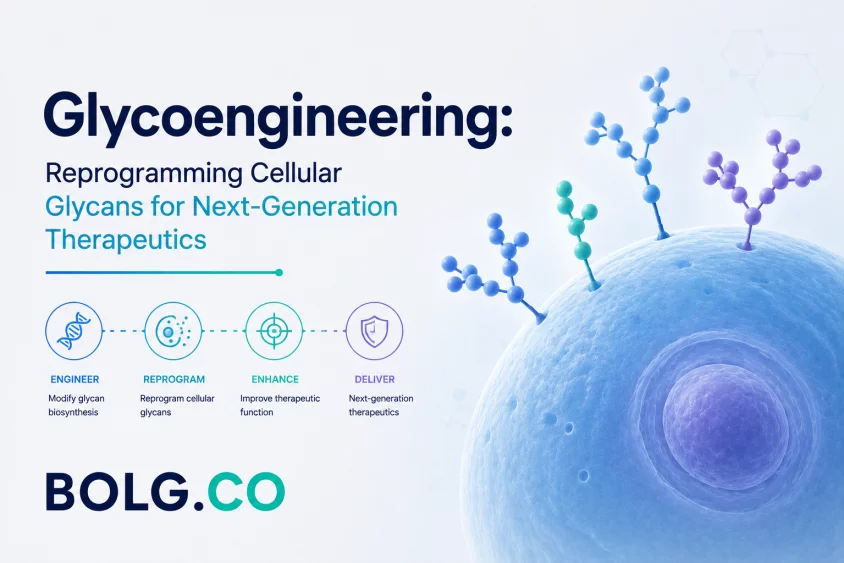
Glycoengineering is the deliberate modification or redesign of cellular glycosylation pathways to control the structure and function of glycans.
By manipulating these molecular sugar structures, researchers are developing new approaches to improve therapeutic proteins, engineer immune responses, develop diagnostics, and create more precise treatments.
The field represents an important shift in biotechnology—from simply engineering proteins to engineering the molecular environment that determines how those proteins behave inside the body.
What Are Glycans?
Glycans are carbohydrate structures composed of individual sugar molecules linked together in highly diverse arrangements.
They can be found:
Attached to proteins
Attached to lipids
On cell membranes
In the extracellular matrix
In mucus
On antibodies
On hormones and receptors
Unlike DNA, which uses a relatively simple four-letter genetic code, glycans can form extraordinarily complex structures through branching, linkage, and chemical modification.
This structural diversity allows glycans to encode biological information.
Glycans Can Influence
Cell recognition — helping cells distinguish between different molecular environments.
Immune regulation — influencing whether immune cells activate, tolerate, or eliminate a target.
Protein stability — affecting how long proteins remain functional.
Protein trafficking — influencing where molecules are transported within cells.
Cell adhesion — helping cells interact with neighboring cells and tissues.
Disease progression — contributing to cancer, inflammation, infection, and metabolic disorders.
Understanding this molecular language is therefore essential for developing the next generation of biotechnology.
Glycosylation: Nature's Molecular Modification System
Glycosylation is the enzymatic process through which glycans are attached to proteins or lipids.
It is one of the most common forms of post-translational modification.
Two major forms of protein glycosylation are particularly important:
N-Linked Glycosylation
Glycans are attached to specific nitrogen-containing amino acid residues, typically asparagine.
N-linked glycosylation plays important roles in:
Protein folding
Protein stability
Cellular trafficking
Immune recognition
O-Linked Glycosylation
Glycans are attached primarily to oxygen-containing groups on amino acids such as serine and threonine.
O-linked glycans are particularly important in:
Mucins
Cell-surface proteins
Cell adhesion
Immune interactions
The enormous diversity of glycosylation patterns means that two otherwise similar proteins can behave very differently depending on their glycan structures.
What Is Glycoengineering?
Glycoengineering involves deliberately modifying the cellular machinery responsible for glycan synthesis and attachment.
Researchers can alter glycosylation by manipulating:
Glycosyltransferases
Glycosidases
Sugar-nucleotide pathways
Transport proteins
Cellular metabolic pathways
Expression of specific enzymes
The goal is not simply to produce more glycans, but to create specific glycan profiles associated with desirable biological functions.
This approach can be applied to microorganisms, mammalian cells, plants, and engineered production systems.
Why Glycoengineering Matters for Biotechnology
Modern biotechnology increasingly relies on complex biological molecules.
Examples include:
Monoclonal antibodies
Recombinant proteins
Enzyme replacement therapies
Hormones
Vaccines
Cell-based therapeutics
Many of these products are glycosylated.
Consequently, controlling glycosylation can dramatically influence their:
Activity
Stability
Half-life
Immunogenicity
Pharmacokinetics
Interaction with immune cells
This makes glycoengineering particularly valuable in the development and manufacturing of biopharmaceuticals.
Glycoengineered Antibodies: Enhancing Therapeutic Power
One of the most important applications of glycoengineering is the development of improved monoclonal antibodies.
Antibodies can recruit immune cells to eliminate diseased cells through mechanisms such as antibody-dependent cellular cytotoxicity (ADCC).
The carbohydrate structures attached to the antibody's Fc region can influence how strongly it interacts with immune receptors.
By modifying Fc glycosylation, researchers can potentially enhance immune-cell recruitment and improve therapeutic activity.
Potential Benefits
Glycoengineering can be used to develop antibodies with:
Enhanced immune effector activity
Improved pharmacological properties
Reduced unwanted immune interactions
More consistent manufacturing characteristics
This represents an important example of how manipulating a small molecular feature can produce significant therapeutic consequences.
Glycoengineering in Cancer
Cancer cells often display abnormal glycosylation patterns.
Changes in cell-surface glycans can influence:
Tumor growth
Metastasis
Immune evasion
Cell adhesion
Tumor–microenvironment interactions
These abnormal glycan signatures create opportunities for both diagnostics and therapy.
Glycan-Based Cancer Biomarkers
Specific glycan patterns may serve as biomarkers for:
Cancer detection
Disease classification
Treatment response
Disease progression
Targeting Tumor-Associated Glycans
Researchers are exploring therapeutic strategies that recognize abnormal glycans on tumor cells.
Potential approaches include:
Glycan-targeting antibodies
Engineered immune cells
Glycan-binding proteins
Vaccines targeting tumor-associated carbohydrate structures
Glycoengineering could therefore contribute to the development of increasingly precise cancer therapies.
Glycoengineering and Immunotherapy
The immune system constantly interprets glycan patterns.
Glycans can act as molecular signals that influence whether immune cells become activated or remain tolerant.
This makes glycoengineering particularly interesting for immunotherapy.
Researchers are investigating ways to manipulate glycosylation to influence:
T-cell activity
Natural killer cell responses
Macrophage behavior
Immune checkpoint signaling
Inflammatory pathways
In the future, engineered glycan profiles could potentially be incorporated into therapeutic cells or biologics to fine-tune immune responses.
Glycoengineering in Cell and Gene Therapy
Advanced cell therapies introduce another exciting application.
Therapeutic cells interact with the patient's immune system, extracellular matrix, and surrounding tissues. Their surface glycosylation can influence these interactions.
Glycoengineering may eventually help researchers develop therapeutic cells with:
Improved persistence
Enhanced tissue targeting
Reduced immune recognition
Controlled interactions with immune cells
Improved therapeutic functionality
This could become particularly relevant for the development of increasingly sophisticated cell-based therapies.
Glycans and Precision Medicine
Precision medicine aims to tailor treatment according to the molecular characteristics of an individual patient.
Glycans offer another layer of biological information that could contribute to this goal.
Glycomic Profiles
Patient-specific glycan patterns may provide information about:
Disease state
Immune activity
Cancer progression
Metabolic status
Treatment response
Integrating glycomic information with genomics, transcriptomics, proteomics, and other molecular datasets could create a more comprehensive molecular profile of disease.
This emerging approach is sometimes described as integrated multi-omics, where glycans provide an additional layer of biological information beyond DNA and proteins.
Glycoengineering and Biopharmaceutical Manufacturing
Glycosylation is also a major consideration in the production of therapeutic proteins.
Biopharmaceutical manufacturing commonly relies on engineered cell lines to produce complex molecules.
However, different production systems can generate different glycosylation patterns.
This creates an important manufacturing challenge:
How can biotechnology companies produce therapeutic molecules with precisely controlled and reproducible glycan structures?
Glycoengineering provides part of the answer.
Researchers can modify production cells to create more predictable glycosylation profiles.
This may improve:
Product consistency
Therapeutic activity
Manufacturing efficiency
Quality control
Batch-to-batch reproducibility
The Rise of Glycomics
Just as genomics studies genomes and proteomics studies proteins, glycomics focuses on the complete collection of glycans within a biological system.
Modern glycomics combines:
Mass spectrometry
Chromatography
Nuclear magnetic resonance
Glycan-binding technologies
Computational analysis
Bioinformatics
These technologies enable researchers to characterize increasingly complex glycan structures.
However, glycomics remains challenging because glycans can have enormous structural diversity, including different branching patterns and molecular linkages.
Artificial Intelligence Meets Glycobiology
Artificial intelligence is beginning to provide new opportunities for analyzing the complexity of glycan biology.
Machine learning approaches can potentially assist with:
Glycan structure prediction
Glycosylation-site analysis
Biomarker discovery
Protein–glycan interaction prediction
Therapeutic optimization
Interpretation of large glycomics datasets
The combination of AI, glycomics, and glycoengineering could significantly accelerate the discovery of new therapeutic strategies.
As computational models become more capable, researchers may increasingly use them to predict how specific modifications to glycosylation pathways will affect therapeutic outcomes.
Glycoengineering Beyond Medicine
Although healthcare is one of the most prominent applications, glycoengineering has a much broader biotechnology footprint.
Industrial Biotechnology
Engineered glycosylation pathways can be used to produce specialized biomolecules and enzymes.
Food Biotechnology
Glycans influence food structure, nutrition, and interactions with the human microbiome.
Diagnostics
Specific glycan signatures can potentially serve as biomarkers for disease detection and monitoring.
Vaccine Development
Glycan structures can influence antigen recognition and immune responses, creating opportunities for improved vaccine design.
Biomanufacturing
Engineering cellular metabolism can enable production systems optimized for specific glycosylated products.
Major Challenges in Glycoengineering
Despite its enormous potential, glycoengineering remains technically demanding.
1. Glycan Complexity
The structural diversity of glycans makes them significantly more difficult to characterize and control than many conventional biomolecules.
2. Cellular Context
Glycosylation depends heavily on the cellular environment and the availability of enzymes and metabolic substrates.
3. Analytical Challenges
Accurately identifying glycan structures requires sophisticated analytical technologies.
4. Manufacturing Consistency
Maintaining consistent glycosylation patterns during large-scale production remains an important challenge.
5. Biological Complexity
Changing one glycosylation pathway can have unexpected effects elsewhere in the cell.
These challenges highlight the need for interdisciplinary expertise spanning molecular biology, biochemistry, analytical science, bioinformatics, and biotechnology engineering.
The Future of Glycoengineering
The next generation of glycoengineering is likely to move from relatively broad modifications toward precisely programmed glycan architectures.
Future technologies may enable scientists to:
Design therapeutic proteins with optimized glycan profiles
Engineer cells with customized surface glycans
Develop glycan-based cancer diagnostics
Create more precise immune therapies
Predict glycosylation using AI
Integrate glycomics with multi-omics medicine
Develop personalized glycan-based treatment strategies
One particularly exciting possibility is the emergence of precision glycoengineering, where glycan structures are deliberately designed according to the therapeutic objective.
Instead of asking only:
"Which protein should we engineer?"
future biotechnology may increasingly ask:
"Which protein—and which glycan architecture—will produce the desired biological response?"
That shift could open an entirely new dimension of therapeutic design.
Conclusion
Glycoengineering is transforming glycans from an overlooked biological feature into a powerful engineering target.
By manipulating cellular glycosylation pathways, scientists can influence protein function, immune recognition, cellular communication, disease progression, and therapeutic performance.
The field sits at the intersection of glycobiology, molecular biotechnology, synthetic biology, immunology, bioinformatics, and precision medicine, making it an increasingly important area for the next generation of biotechnology research.
As analytical technologies become more powerful and AI-driven approaches accelerate glycan discovery, the ability to design and control cellular glycans may become a fundamental component of future therapeutic development.
The next revolution in biotechnology may not simply involve engineering genes, proteins, or cells.
It may involve engineering the molecular sugars that connect them all.
🚀 Explore the Next Frontier of Biotechnology with BOLG
The future of biotechnology belongs to those who can understand biology at increasingly deeper levels—from genes and proteins to glycans, cellular interactions, and molecular networks.
BOLG brings cutting-edge biotechnology knowledge closer to learners, researchers, and aspiring professionals through expertly developed learning materials covering molecular biology, synthetic biology, bioinformatics, precision medicine, biotechnology innovation, and emerging life-science technologies.
🧬 Decode the hidden language of biology. Discover the technologies shaping tomorrow. Build your biotechnology future with BOLG.