
🧬 Molecular Robotics: Building Nanoscale Machines for Precision Medicine
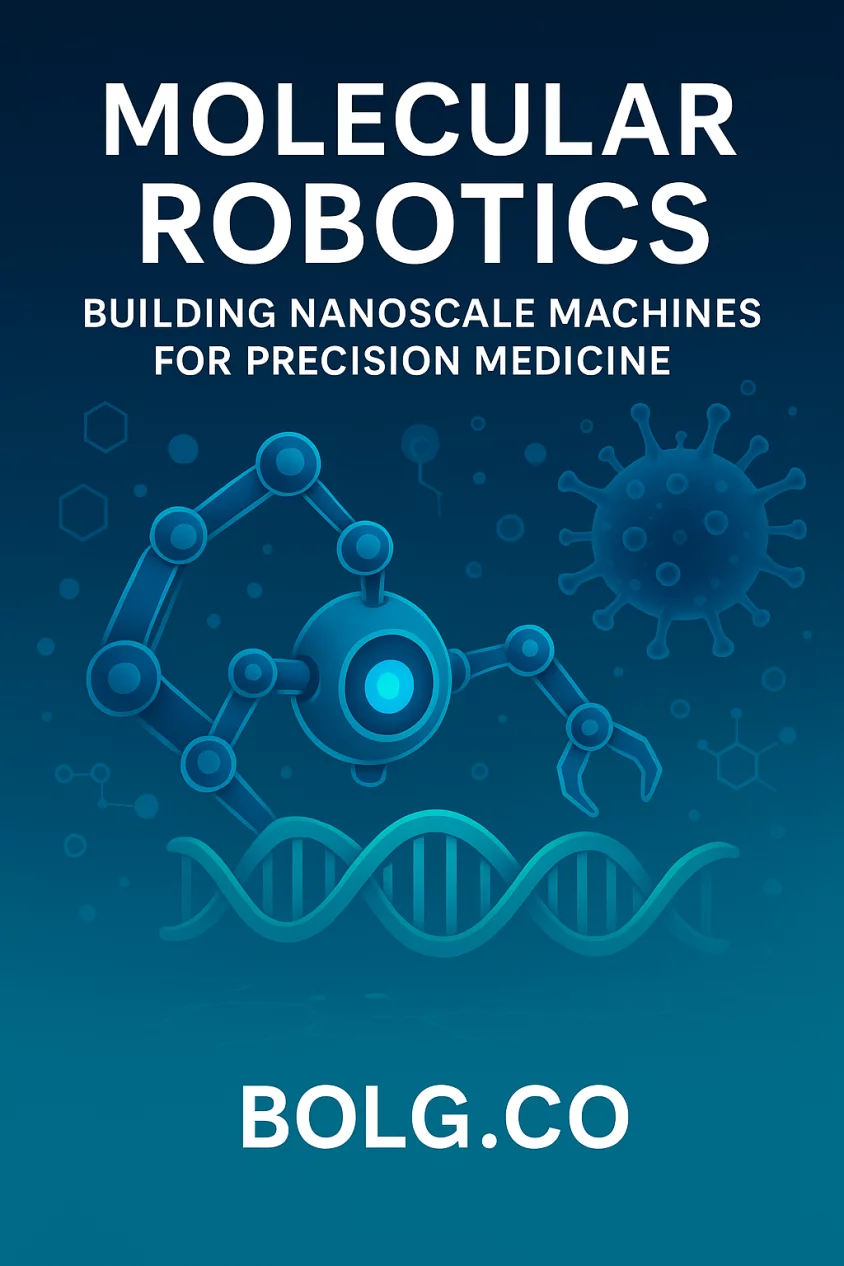
In the rapidly evolving landscape of biotechnology, molecular robotics is emerging as one of the most transformative frontiers. This interdisciplinary field merges principles from synthetic biology, nanotechnology, and robotics to design and construct nanoscale systems capable of performing programmable tasks within living organisms.
Imagine a future where microscopic robots, built from biological molecules, patrol your bloodstream to detect early signs of disease, deliver targeted therapies, or even repair damaged tissues at the cellular level. This is not science fiction—it’s the real, accelerating promise of molecular robotics in precision medicine.
What Is Molecular Robotics?
Molecular robotics refers to the creation of autonomous molecular systems that can sense, compute, and act at the nanoscale. These “machines” are typically made of biological polymers such as DNA, RNA, and proteins, and are designed to mimic the logic and movement found in natural biological systems.
Just as electronic robots are programmed using code, molecular robots are programmed using chemistry and genetic sequences, enabling them to perform specific actions under precise biological conditions.
Building Blocks of Molecular Robots
The construction of molecular robots relies on several cutting-edge technologies:
🔹 DNA Nanotechnology: DNA molecules are used not only as genetic material but as programmable building blocks. Using techniques like DNA origami, scientists can fold strands of DNA into specific 3D structures that move or respond to stimuli.
🔹 Protein Engineering: Proteins are nature’s machines—capable of movement, signaling, and catalysis. Through protein design, researchers can build mechanical parts like levers, hinges, and rotors on a molecular scale.
🔹 Biohybrid Systems: By integrating synthetic components with living cells, hybrid molecular robots can interact with biological systems directly, amplifying control and precision.
Together, these components form nanoscale robots that can sense signals, compute responses, and execute targeted actions within complex biological environments.
Applications in Precision Medicine
Molecular robotics is driving a paradigm shift in medicine, moving from generalized treatments to highly individualized, precision-based interventions.
1. Targeted Drug Delivery
DNA-based nanomachines can be programmed to deliver drugs to specific cells, releasing them only in response to certain molecular triggers, such as a tumor marker or pH change. This minimizes side effects and maximizes therapeutic efficiency.
2. Molecular Diagnostics
Molecular robots can detect and report the presence of specific biomolecules or pathogens, functioning as autonomous diagnostic devices at the nanoscale. For example, a molecular robot could circulate in the bloodstream and “light up” in response to early-stage cancer biomarkers.
3. Regenerative Medicine and Tissue Repair
Protein-based nanomachines may one day assist in rebuilding damaged tissues, guiding stem cells, or repairing cellular structures after injury or degeneration.
4. Smart Immunotherapy
By integrating with immune cells, molecular robots could train or modulate immune responses—enhancing cancer immunotherapy or suppressing autoimmune attacks.
The Challenges Ahead
While molecular robotics holds immense promise, it also presents significant scientific and ethical challenges:
Complexity and Control: Designing stable, functional molecular machines that operate reliably inside living systems is a major engineering challenge.
Biocompatibility and Safety: Ensuring that these robots do not trigger immune responses or unintended biological effects is crucial.
Ethical Implications: As these technologies gain the power to alter life processes at the molecular level, new frameworks for ethical regulation and biosecurity will be essential.
Despite these hurdles, advances in AI-assisted modeling, high-resolution imaging, and synthetic biology are rapidly propelling the field forward.
Future Directions: Toward Intelligent Living Systems
The future of molecular robotics lies in self-regulating, adaptive systems—machines that can not only sense and respond but learn and evolve within biological environments. Integrating machine learning, molecular computing, and biofabrication could lead to a new era of intelligent living technologies that blur the boundary between biology and engineering.
In the coming decade, molecular robotics may redefine what it means to heal, to enhance, and even to understand life itself.
Conclusion: Shaping the Future with BOLG
As we stand at the threshold of this nanoscale revolution, understanding the science of molecular robotics is more than a curiosity—it’s a glimpse into the future of medicine and biotechnology.
At BOLG, we empower learners, researchers, and professionals to explore cutting-edge advancements in molecular biology, nanotechnology, and bioengineering. Whether you’re looking to master the fundamentals or dive into futuristic biotechnologies, BOLG provides comprehensive learning materials, and research insights designed to elevate your career and ignite your curiosity.
🚀 Dive into the microscopic world of molecular robotics with BOLG — where biology meets innovation, and learning builds the future.