
🧬 Organelle Engineering: Reprogramming Cellular Compartments for Precision Therapeutics
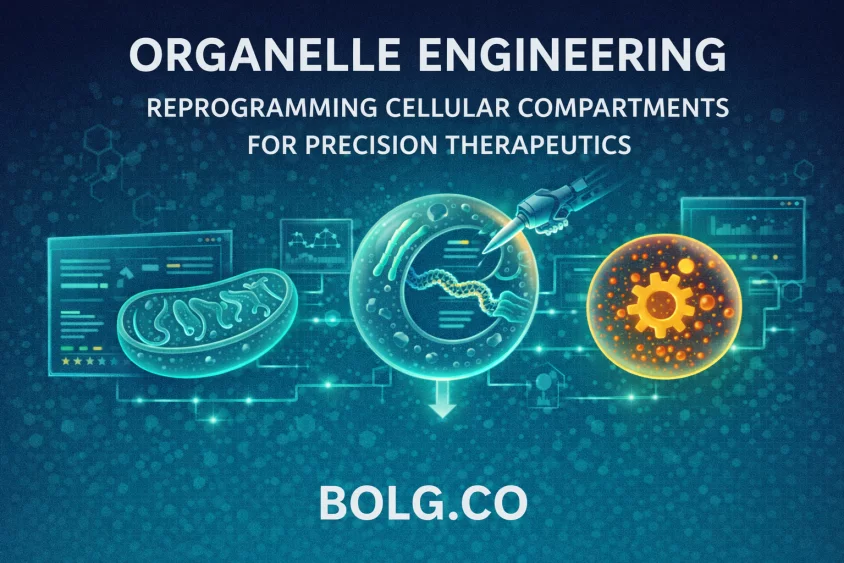
For decades, biotechnology has focused on editing genes, regulating epigenomes, and programming cellular networks. But a new frontier is emerging—one that operates inside the cell’s internal architecture.
Organelle engineering represents a transformative shift in modern biotechnology. Rather than modifying DNA alone, scientists are now reprogramming the cell’s internal compartments—mitochondria, lysosomes, endoplasmic reticulum, and beyond—to achieve unprecedented therapeutic precision.
This approach moves biotechnology from genome-level control to subcellular systems engineering, opening new pathways for treating metabolic diseases, neurodegeneration, cancer, and aging.
What Is Organelle Engineering?
Organelle engineering refers to the deliberate modification, targeting, or redesign of cellular compartments to alter biological function.
Instead of asking:
How do we change gene expression?
We now ask:
How do we control the internal machinery that powers and regulates the cell?
Each organelle performs specialized tasks:
Mitochondria → Energy production and apoptosis
Lysosomes → Waste degradation and recycling
Endoplasmic reticulum (ER) → Protein synthesis and folding
Golgi apparatus → Protein trafficking
Peroxisomes → Lipid metabolism
Engineering these compartments allows scientists to rewrite cellular behavior at its functional core.
Mitochondrial Engineering: Rewriting Cellular Power Systems
Mitochondria possess their own DNA, making them unique targets for therapeutic intervention.
Key Advances
Mitochondrial genome editing technologies
Organelle-targeted gene delivery systems
Reprogramming metabolic flux
Modulating reactive oxygen species (ROS) production
Therapeutic Potential
Treatment of mitochondrial diseases
Neurodegenerative disorder intervention
Cancer metabolism reprogramming
Anti-aging strategies
By targeting mitochondria directly, researchers can control cellular energy balance and apoptotic pathways, offering precision therapies previously unimaginable.
Lysosome Engineering: Controlling Cellular Recycling Systems
Lysosomes are central to cellular waste management and autophagy. Dysfunction in lysosomal pathways contributes to:
Lysosomal storage disorders
Neurodegenerative diseases
Aging-related cellular decline
Emerging Strategies
Enzyme replacement targeting lysosomal compartments
Gene circuits that activate under lysosomal stress
Autophagy pathway modulation
By enhancing or correcting lysosomal function, organelle engineering supports cellular detoxification and regenerative capacity.
Synthetic Organelles: Building New Intracellular Systems
Beyond modifying natural compartments, researchers are now designing synthetic organelles—engineered intracellular structures that introduce new biochemical capabilities.
Applications Include:
Compartmentalized metabolic pathways
Controlled drug activation inside cells
Localized biosensing platforms
Intracellular biomanufacturing systems
Synthetic organelles reduce unwanted cross-reactions and improve therapeutic specificity by isolating biological processes within controlled microenvironments.
Targeted Intracellular Drug Delivery
One of the most powerful applications of organelle engineering is organelle-specific drug targeting.
Modern delivery systems can:
Direct therapeutics specifically to mitochondria
Release drugs only inside lysosomes
Activate compounds within defined intracellular compartments
This dramatically improves:
Treatment efficacy
Dosage precision
Safety profiles
Precision targeting at the organelle level represents the next evolution of nanomedicine and intracellular pharmacology.
Organelle Engineering and Systems Biology
Organelle function is interconnected. Reprogramming one compartment influences:
Cellular signaling networks
Metabolic balance
Stress response pathways
Immune signaling
Thus, organelle engineering is not isolated manipulation—it is systems-level cellular redesign.
When integrated with:
Synthetic biology
Spatial omics
AI-driven modeling
Digital cell twins
It enables the construction of predictive and programmable intracellular ecosystems.
Challenges and Ethical Considerations
Despite rapid progress, organelle engineering presents significant challenges:
Efficient and precise intracellular targeting
Long-term safety evaluation
Avoiding unintended metabolic disruption
Regulatory complexity for compartment-specific therapies
Responsible innovation will require multidisciplinary collaboration between molecular biologists, bioengineers, clinicians, and regulatory scientists.
The Future: From Genome Editing to Intracellular Architecture Design
We are entering an era where biotechnology will not only edit genes or regulate pathways—but reconstruct cellular architecture itself.
Organelle engineering represents a transition toward:
Subcellular precision medicine
Metabolic rewiring therapies
Adaptive intracellular systems
Bioengineered cellular resilience
The next generation of therapeutics will not merely modify cells—they will redesign how cells function from the inside out.
🚀 Engineer the Future of Cellular Systems with BOLG
At BOLG, we explore the most advanced frontiers of biotechnology—from genome editing and synthetic epigenetics to spatial biology and intracellular systems engineering. Our learning materials are designed to empower innovators who want to lead the next wave of scientific transformation.
Step beyond genes. Step inside the cell. Reimagine biology at the organelle level with BOLG—where knowledge becomes innovation and innovation becomes impact.
👉 Discover more at www.bolg.co