
Programmable Living Medicines: Engineering Cells as Intelligent Therapeutics
Course Overview
Modern medicine is rapidly evolving beyond conventional drugs and biologics toward an entirely new class of therapeutics known as programmable living medicines. Unlike traditional medicines that deliver a fixed therapeutic effect, living medicines consist of genetically engineered living cells capable of sensing their environment, processing biological information, making autonomous decisions, and executing therapeutic responses in real time. These "smart" cellular therapies represent one of the most transformative frontiers in biotechnology, synthetic biology, regenerative medicine, and precision healthcare.
By integrating synthetic biology, genetic engineering, cell therapy, gene circuits, immunoengineering, and computational biology, scientists are creating programmable cells that function as miniature biological computers capable of detecting disease biomarkers, responding only when needed, and continuously adapting to changing physiological conditions.
This comprehensive self-guided course provides a complete understanding of programmable living medicines, covering the biological principles, engineering strategies, therapeutic applications, manufacturing challenges, safety mechanisms, ethical considerations, and future directions. Every concept is explained in detail, allowing learners to master this cutting-edge field without requiring additional resources or external instruction.
Learning Objectives
By the end of this course, you will be able to:
Define programmable living medicines and explain how they differ from conventional pharmaceuticals.
Understand the biological principles behind engineered therapeutic cells.
Explain how synthetic gene circuits enable cells to sense, compute, and respond to disease.
Describe different types of programmable cellular therapies.
Understand the role of immune cells, stem cells, and microbial cells as therapeutic platforms.
Explore the latest clinical applications in cancer, autoimmune disorders, infectious diseases, metabolic disorders, and regenerative medicine.
Recognize the engineering challenges, biosafety strategies, and regulatory considerations involved in living medicines.
Appreciate the future impact of intelligent therapeutic cells on precision medicine.
Module 1: Introduction to Programmable Living Medicines
What Are Programmable Living Medicines?
Programmable living medicines are living cells that have been genetically engineered to perform therapeutic functions inside the human body. Unlike conventional drugs, which generally have fixed chemical compositions and limited durations of action, living medicines can continuously monitor their environment, detect disease-specific signals, process biological information, and initiate highly targeted therapeutic responses.
These engineered cells function as intelligent therapeutic systems, capable of adapting to changing physiological conditions and responding only when specific disease-related biomarkers are present.
Unlike traditional medications that simply deliver a drug molecule, programmable living medicines actively participate in disease management by continuously interacting with the body's biological systems.
How Do Living Medicines Work?
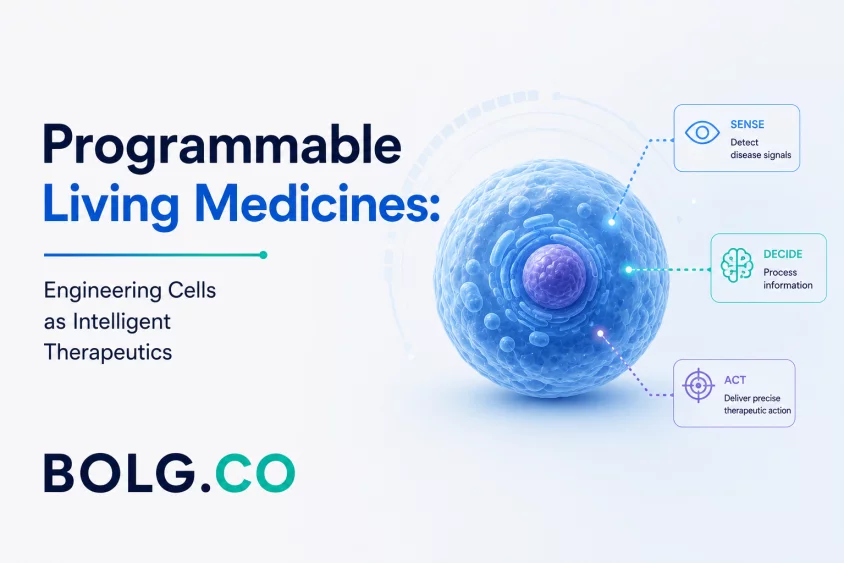
Programmable therapeutic cells generally operate through four interconnected steps:
Sensing – The engineered cell detects specific biological signals such as inflammatory cytokines, cancer antigens, metabolites, or pathogen-associated molecules.
Processing – Synthetic gene circuits analyze the detected information using engineered biological logic similar to computational decision-making.
Decision Making – The cell determines whether therapeutic intervention is necessary based on predefined genetic programming.
Response – The cell produces an appropriate therapeutic output, such as releasing cytokines, antibodies, enzymes, hormones, growth factors, or immune-stimulating molecules.
This autonomous decision-making capability distinguishes programmable living medicines from conventional therapeutics.
Module 2: Engineering Intelligent Therapeutic Cells
Synthetic Gene Circuits
A synthetic gene circuit is an engineered genetic network that controls cellular behavior similarly to how electronic circuits control computers.
Gene circuits typically contain:
Biological sensors
Promoters
Regulatory proteins
Signal amplifiers
Output genes
Feedback mechanisms
These components allow engineered cells to perform logical operations such as:
IF
AND
OR
NOT
For example, a therapeutic cell may only activate if Cancer Marker A AND Cancer Marker B are both detected, greatly improving treatment specificity.
Cellular Biosensors
A biosensor is a biological component that detects specific molecular signals.
Engineered biosensors enable cells to recognize:
Tumor-associated proteins
Viral antigens
Bacterial toxins
Inflammatory molecules
Blood glucose
Oxygen concentration
Tissue damage
Metabolic changes
These sensors transform cells into continuously operating diagnostic and therapeutic systems.
Logic-Gated Therapeutics
Logic gating increases therapeutic precision by requiring multiple biological conditions before activating treatment.
Examples include:
Treat cancer cells only if two tumor markers are present.
Release anti-inflammatory molecules only during excessive immune activation.
Produce insulin only when blood glucose exceeds a threshold.
Logic-based therapeutic systems significantly reduce unwanted side effects.
Module 3: Types of Programmable Living Medicines
Engineered Immune Cells
Immune cells are among the most widely used programmable living medicines.
Examples include:
CAR-T cells
CAR-NK cells
Engineered macrophages
Regulatory T cells (Tregs)
Dendritic cells
These cells can recognize diseased tissues with exceptional specificity while preserving healthy cells.
Stem Cell-Based Living Medicines
Stem cells possess the ability to self-renew and differentiate into multiple specialized cell types.
Engineered stem cells can be programmed to:
Regenerate damaged tissues
Deliver therapeutic proteins
Replace dysfunctional cells
Repair degenerative organs
Applications include neurological disorders, cardiovascular disease, diabetes, and musculoskeletal regeneration.
Engineered Microbial Therapeutics
Beneficial bacteria can also function as programmable medicines.
Scientists engineer probiotic microorganisms to:
Produce therapeutic compounds
Detect inflammation
Deliver enzymes
Modulate immune responses
Eliminate pathogens
Restore microbial balance
These living therapeutics are particularly promising for gastrointestinal diseases.
Module 4: Clinical Applications
Cancer Therapy
Programmable living medicines are revolutionizing oncology.
Engineered immune cells can:
Detect tumor antigens
Destroy malignant cells
Recruit additional immune cells
Overcome tumor immune suppression
Prevent cancer recurrence
Modern cell therapies increasingly incorporate sophisticated genetic circuits for greater safety and precision.
Autoimmune Diseases
Living medicines can restore immune balance rather than suppressing the immune system indiscriminately.
Potential applications include:
Rheumatoid arthritis
Multiple sclerosis
Type 1 diabetes
Inflammatory bowel disease
Lupus
Engineered immune cells selectively suppress harmful immune activity while preserving normal immunity.
Infectious Diseases
Engineered cells can detect invading pathogens and respond by:
Producing antimicrobial peptides
Enhancing immune activation
Neutralizing toxins
Delivering antiviral proteins
These adaptive therapies may become valuable tools against emerging infectious diseases.
Metabolic Disorders
Living medicines are also being developed for chronic metabolic diseases.
Examples include engineered cells capable of regulating:
Blood glucose
Cholesterol
Hormone production
Enzyme deficiencies
Such therapies could provide continuous physiological regulation without frequent medication.
Regenerative Medicine
Engineered therapeutic cells promote healing by producing:
Growth factors
Extracellular matrix proteins
Angiogenic molecules
Anti-inflammatory cytokines
Applications include:
Cardiac repair
Neural regeneration
Bone healing
Liver regeneration
Skin reconstruction
Module 5: Safety, Manufacturing, and Future Perspectives
Safety Mechanisms
Because living medicines remain biologically active, multiple safety strategies are incorporated.
These include:
Kill switches that eliminate engineered cells when necessary.
Drug-controlled activation systems.
Self-limiting genetic circuits.
Target-specific activation.
Biocontainment mechanisms.
These safeguards help minimize unintended biological effects.
Manufacturing Challenges
Developing programmable living medicines requires:
Cell isolation
Genetic engineering
Quality control
Large-scale cell expansion
Cryopreservation
Sterility testing
Regulatory compliance
Advances in automated manufacturing are improving scalability and accessibility.
Ethical and Regulatory Considerations
As programmable living medicines become increasingly sophisticated, ethical questions arise regarding:
Long-term cellular persistence
Genetic modifications
Patient safety
Data privacy
Regulatory oversight
Equitable access
International regulatory agencies continue developing frameworks to ensure these therapies are safe, effective, and ethically implemented.
Future Directions
Future programmable living medicines are expected to incorporate:
Artificial intelligence-assisted genetic design
Self-learning gene circuits
Multi-cellular therapeutic networks
Personalized cell therapies
Universal off-the-shelf living medicines
Integration with wearable biosensors
Real-time disease monitoring
Autonomous precision treatment
These innovations may fundamentally redefine how diseases are diagnosed, monitored, and treated.
Course Summary
Programmable living medicines represent a revolutionary paradigm in biotechnology, where engineered living cells function as intelligent therapeutics capable of sensing disease, processing biological information, making autonomous decisions, and delivering precise therapeutic responses. By combining synthetic biology, genetic engineering, immunology, and regenerative medicine, scientists are creating adaptive therapies that promise greater specificity, reduced side effects, and long-lasting clinical benefits.
As research advances, programmable living medicines are expected to become a cornerstone of precision medicine, transforming the treatment of cancer, autoimmune disorders, metabolic diseases, infectious diseases, and tissue degeneration.
Glossary
Biosensor: A biological component engineered to detect specific molecular or environmental signals.
CAR-T Cell: A genetically engineered T lymphocyte expressing a Chimeric Antigen Receptor for targeted cancer therapy.
Gene Circuit: An engineered network of genes that controls cellular decision-making.
Living Medicine: A therapeutic composed of living engineered cells capable of sensing and responding to disease.
Logic Gate: A biological decision-making system that activates therapeutic responses only under defined conditions.
Programmable Cell: A genetically modified cell designed to perform predefined biological functions.
Regenerative Medicine: A field focused on repairing or replacing damaged tissues and organs.
Synthetic Biology: An engineering discipline that designs and constructs new biological systems or redesigns existing ones for useful purposes.
Final Thoughts
Programmable living medicines are redefining the future of healthcare by transforming cells into intelligent therapeutic agents capable of diagnosing, computing, and treating disease from within the body. As biotechnology continues to merge with engineering, computation, and artificial intelligence, these living therapeutics will enable safer, smarter, and highly personalized medical interventions. Mastering this field today means understanding one of the most significant scientific revolutions of the 21st century.