
🧬 Synthetic Epigenome Engineering: Programming Gene Expression for Therapeutics and Biotechnology
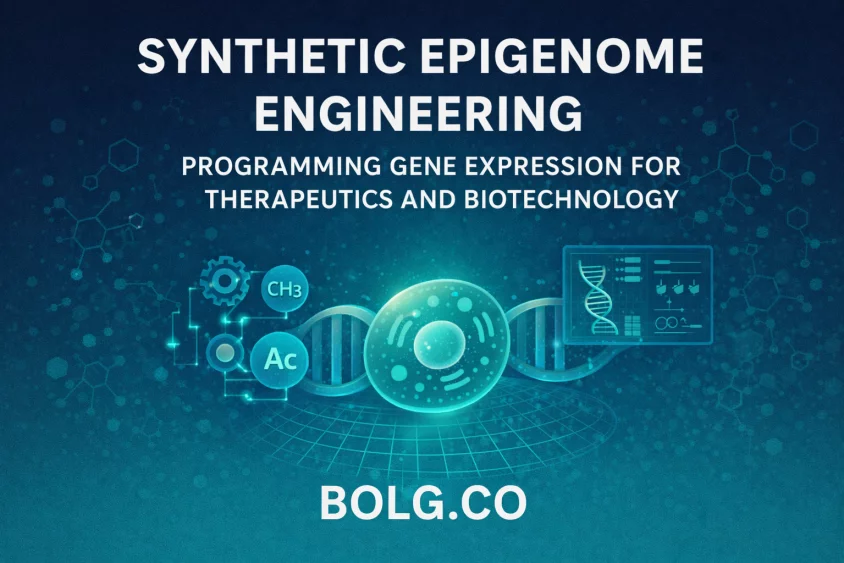
Synthetic epigenome engineering is a cutting-edge field of biotechnology that focuses on programming gene expression without altering the underlying DNA sequence. By targeting epigenetic modifications, scientists can regulate cellular behavior, correct disease-associated dysregulation, and engineer cells for therapeutic and biotechnological purposes.
This course is fully self-guided, providing all definitions, explanations, and examples needed for independent mastery.
Section 1: Fundamentals of Epigenetics
1.1 What is Epigenetics?
Epigenetics is the study of heritable changes in gene expression that do not involve changes to the DNA sequence. Key mechanisms include:
DNA Methylation: Addition of methyl groups to cytosine bases, often repressing gene expression.
Histone Modification: Chemical changes (acetylation, methylation, phosphorylation) to histone proteins, influencing chromatin structure and gene accessibility.
Chromatin Remodeling: Reorganization of chromatin to activate or repress transcription.
Non-coding RNAs: Molecules like microRNAs that regulate gene expression post-transcriptionally.
1.2 Why Epigenetics Matters in Medicine and Biotechnology
Epigenetic dysregulation is associated with:
Cancer
Neurological disorders
Metabolic diseases
Immune dysfunction
Manipulating epigenetic marks allows precise control over gene expression, enabling new therapies and synthetic biology applications.
Section 2: Tools and Techniques for Synthetic Epigenome Engineering
2.1 CRISPR-dCas9 Based Epigenetic Editing
dCas9: A “dead” Cas9 enzyme that binds DNA without cutting it.
Fusion with Epigenetic Effectors:
DNA methyltransferases (DNMTs) → add methylation
TET enzymes → remove methylation
Histone acetyltransferases (HATs) → activate genes
Histone deacetylases (HDACs) → repress genes
This system allows precise, programmable control over specific genes.
2.2 Synthetic Transcription Factors
Engineered proteins that bind DNA and recruit epigenetic modulators to specific genomic loci. These factors can upregulate or silence target genes without altering DNA.
2.3 Small Molecules and RNA-Based Modulators
Epigenetic drugs (e.g., HDAC inhibitors)
siRNA and miRNA mimics to regulate gene expression
Long non-coding RNAs (lncRNAs) for chromatin remodeling
Section 3: Applications in Biotechnology and Medicine
3.1 Therapeutic Applications
Cancer therapy: Reactivate tumor suppressor genes or silence oncogenes.
Regenerative medicine: Reprogram stem cells to specific lineages.
Neurological diseases: Modulate gene expression linked to neurodegeneration.
Autoimmune disorders: Adjust immune cell behavior by modifying epigenetic marks.
3.2 Biotechnological Applications
Engineering microbial or mammalian cells for high-yield production of proteins, metabolites, or therapeutic compounds.
Metabolic pathway optimization via targeted gene regulation.
Development of synthetic circuits that respond dynamically to environmental stimuli.
Section 4: Advantages and Challenges
Advantages:
Reversible gene regulation without permanent DNA changes.
High precision for specific genes or pathways.
Integration with computational models for predictive biology.
Challenges:
Off-target effects of epigenetic editors.
Delivering tools efficiently to target cells or tissues.
Long-term stability of epigenetic modifications.
Ethical and regulatory considerations.
Section 5: Future Directions
Integration with AI and machine learning for predictive epigenome engineering.
Development of multi-layered epigenetic circuits in synthetic biology.
Personalized epigenetic therapies tailored to patient-specific gene expression profiles.
Combination with digital cell twins and spatial biology to design virtual experiments before real-world application.
Section 6: Glossary of Key Terms
Epigenetics: Regulation of gene expression without altering DNA sequence.
CRISPR-dCas9: A non-cutting CRISPR protein used to target DNA for gene regulation.
DNA Methylation: Addition of methyl groups to DNA, often silencing genes.
Histone Modification: Chemical changes to histone proteins affecting chromatin structure.
Synthetic Transcription Factors: Engineered proteins to activate or repress specific genes.
lncRNAs: Long non-coding RNAs involved in gene regulation.
Epigenetic Drugs: Small molecules that modulate epigenetic marks.
Programmable Epigenome: The ability to control gene expression at precise loci using synthetic tools.
Closing Statement
Explore the frontiers of programmable gene regulation with BOLG.
Master synthetic epigenome engineering, reshape cellular behavior, and unlock the potential of modern biotechnology—all in a fully self-guided course.
BOLG: Your gateway to pioneering the future of life sciences.